Partner content — collaboration with German Precision Optics (GPO). We received the equipment described in this article for use as part of our partnership.
There are moments when simply raising binoculars to your eyes makes you forget everything except the scene in front of you. An ordinary stretch of landscape begins to tell a much richer story. You notice the arrangement of feathers, subtle differences in colour, the movement of a beak and small behaviours that were previously lost in the distance. These are the moments that draw us outdoors — and the reason good optics have such an important place at Ptasia Dolina.
When our German Precision Optics equipment arrived, our expectations were high. Even so, our first impressions were a wonderful surprise. Both the view through the binoculars and spotting scope and the quality of their construction impressed us enormously. We told our partner as much shortly after receiving the shipment: we had expected excellent optics, but found even more reason to be enthusiastic. Now we would like to explain what this equipment brings to the way we look at nature.
What exactly has joined our equipment at Ptasia Dolina?
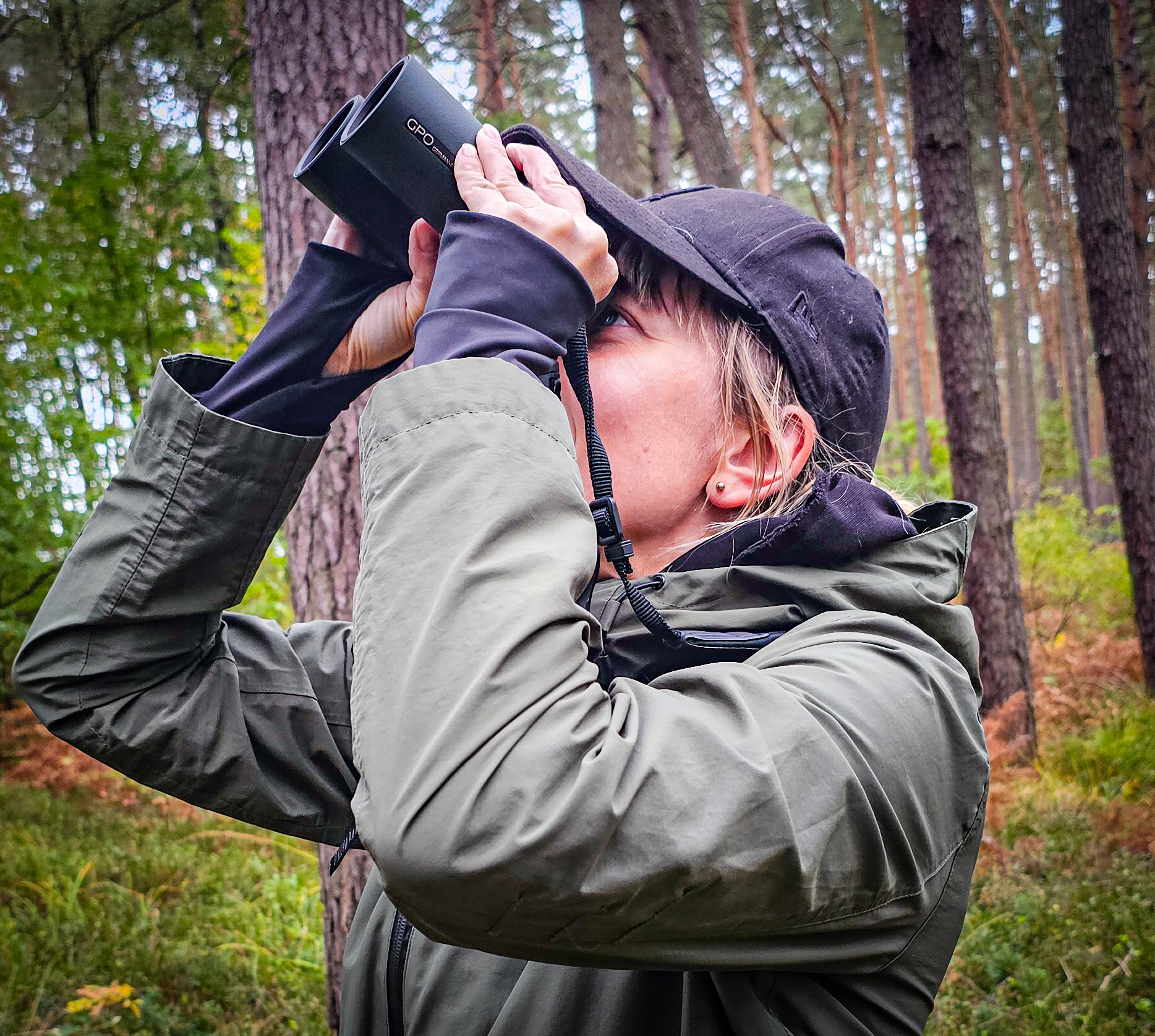
Our GPO set consists of two pairs of PASSION ED 10×42 binoculars in green and a PASSION APO 16–48×65 spotting scope with a tripod. The equipment arrived in September 2026. It is a thoughtful addition to the kit we use on nature outings: the binoculars provide tenfold magnification, while the compact scope lets us examine distant details when we stop along the way.
We particularly like the thinking behind this combination. Binoculars stay close to the observer, ready to be lifted at any moment. A spotting scope encourages you to pause, set up a tripod and take a leisurely look at one part of the landscape. One helps you find an interesting scene; the other lets you spend more time with it. Together, they offer two complementary ways of discovering nature.
First impressions: you want to keep looking
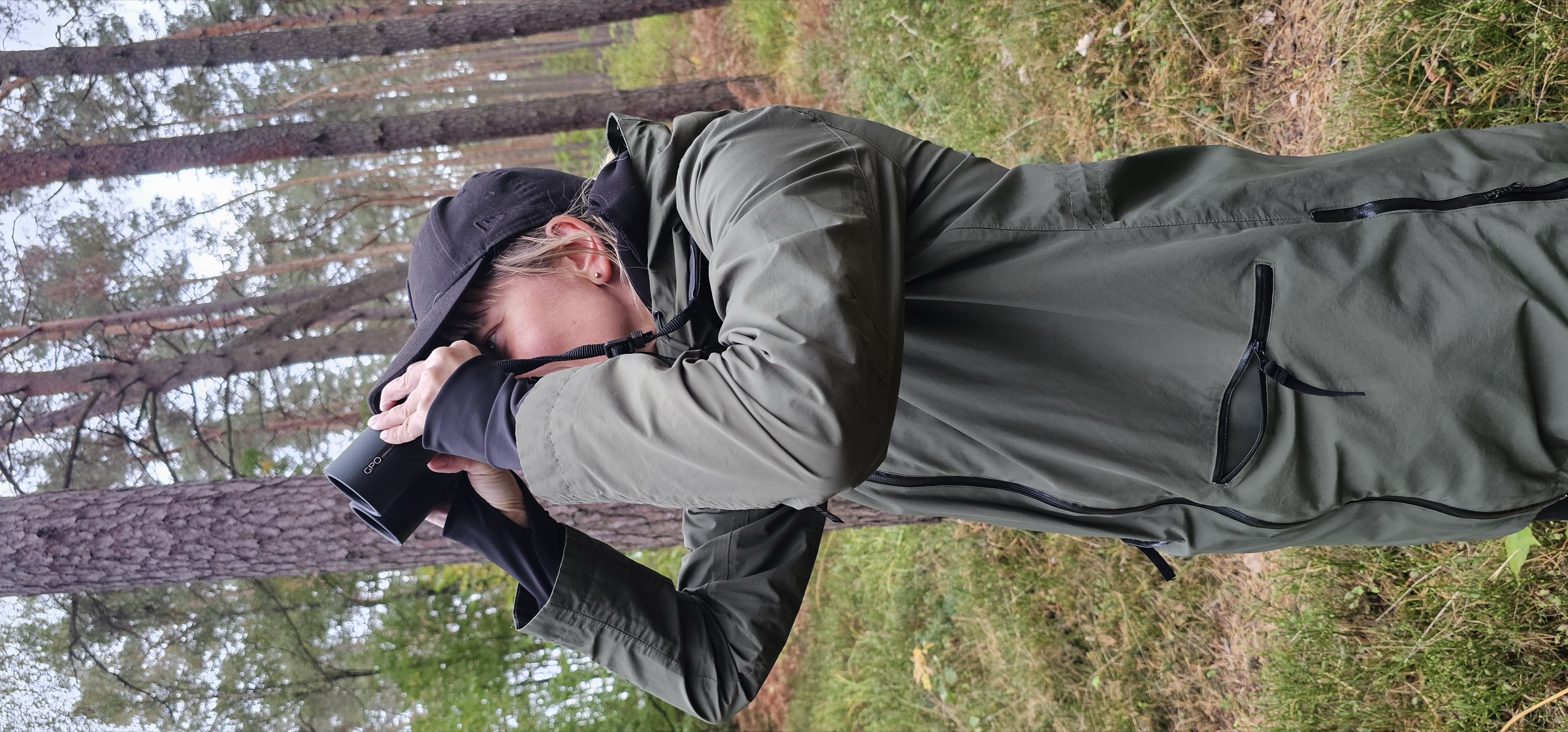
The greatest compliment we can pay a piece of optical equipment after our first encounter is simple: it makes us want to use it. To lift the binoculars again, inspect another part of a treetop or return our gaze to the far bank. With GPO, that enthusiasm was there from the beginning.
Of course, enthusiasm is a personal impression, not a laboratory measurement. This is not a resolution test or a ranking of every brand. We are sharing our pleasure in the image and build quality, and explaining why particular features of these models make sense for nature observation. That distinction matters: you can sincerely appreciate equipment without claiming it achieves the impossible in every condition.
For us, a good image should above all help us concentrate. When we watch a bird, we want to think about its shape, behaviour and place in the landscape. We want to notice how it moves, where it searches for food and what the other birds are doing. Optics are the tool that makes this story easier to follow. Our first encounter with GPO gave us a strong feeling that these instruments were well suited to that role.
PASSION ED 10×42 — a closer look at the details
Tenfold magnification is an appealing option for people who enjoy examining details from a little farther away. In open landscapes, when watching the opposite bank or looking into high branches, a larger image can be very useful. The designation 10×42 tells us that the binoculars offer 10× magnification and objective lenses with a diameter of 42 mm. It is a format that fits the idea of binoculars for nature walks well.
According to the product specifications, the GPO PASSION ED 10×42 features ED glass, multicoated optics, a field of view of 114 m at 1,000 m, a close focus of 2 m and a 4.2 mm exit pupil. The manufacturer lists a weight of 725 g without covers, with a magnesium body and bridge. These are published specifications, not our own measurements. PASSION ED 10×42 specifications.
Behind these numbers lie very practical situations. A bird is not always close, and it may not stay still for long. Sometimes we have only a brief opportunity to notice a head pattern or the proportions of a bill. The extra image scale can help us examine that detail without taking another step towards the animal. That is exactly the kind of use that interests us most.
At the same time, 10× binoculars benefit from a steady hold. Higher magnification also reveals more hand movement, so it helps to rest your elbows against your body, relax your shoulders and stand firmly. This is entirely compatible with appreciating the equipment: good viewing technique simply helps you make the most of good optics. Together, they deliver the satisfaction we head outdoors to find.
Why does ED glass matter when watching birds?
Nature observation often involves scenes with strong contrast: a dark silhouette against a bright sky, branches in strong light or pale plumage beside dark water. Such situations can reveal chromatic aberration — coloured fringes along the edges of contrasting objects. Low-dispersion glass helps reduce this effect, although the final result also depends on the complete optical design and viewing conditions.
For a beginner, the name of the technology may sound abstract. Its purpose is straightforward, though: we want a bird's details to be as clear as possible. When identifying a species, a small part of its plumage pattern may matter; when simply enjoying the view, it might be a subtle transition in colour or the texture of feathers. A high-quality image is a pleasure even when we are not trying to identify anything and are just looking.
We do not expect binoculars to replace patience, knowledge of birds or good light. What we appreciate is a tool that encourages attention. Instead of ending an observation with “there is something sitting over there”, we can spend a little time noticing what it looks like and what it is doing. In that sense, good glass helps develop our curiosity about nature.
Build quality that inspires confidence from the start
The second reason for our enthusiasm was the build quality. Field equipment cannot be described solely through image specifications. We pick up binoculars repeatedly, carry them on walks, put them down and raise them again. They are objects we spend time with, so a sense of solidity and care in their construction matters to us.
The magnesium construction of the PASSION ED is a tangible material advantage. We appreciate the combination of a sturdy body and a format intended to be taken outdoors regularly. Our first impression of the quality was decidedly positive: this is equipment that makes us want to treat it as a regular companion on our outings. The green colour also suits the character of Ptasia Dolina beautifully — woodland, reeds, meadows and a quiet presence in the landscape.
Equally important is adjusting the binoculars for the person using them. It is worth taking a moment to set the distance between the barrels, the eyecups and the dioptre adjustment according to the instructions. This makes viewing more comfortable and allows us to appreciate the image fully. During someone's first encounter with the equipment, a little help with these adjustments can be more valuable than a long list of technical terms.
Longevity takes years to assess, so we do not pretend that the first few weeks replace a test over many seasons. What we can honestly say is that this relationship has started extremely well. The feeling of solidity goes hand in hand with the pleasure of looking, and that is precisely the combination we seek in equipment for our nature activities.
Two pairs of binoculars, more discoveries to share
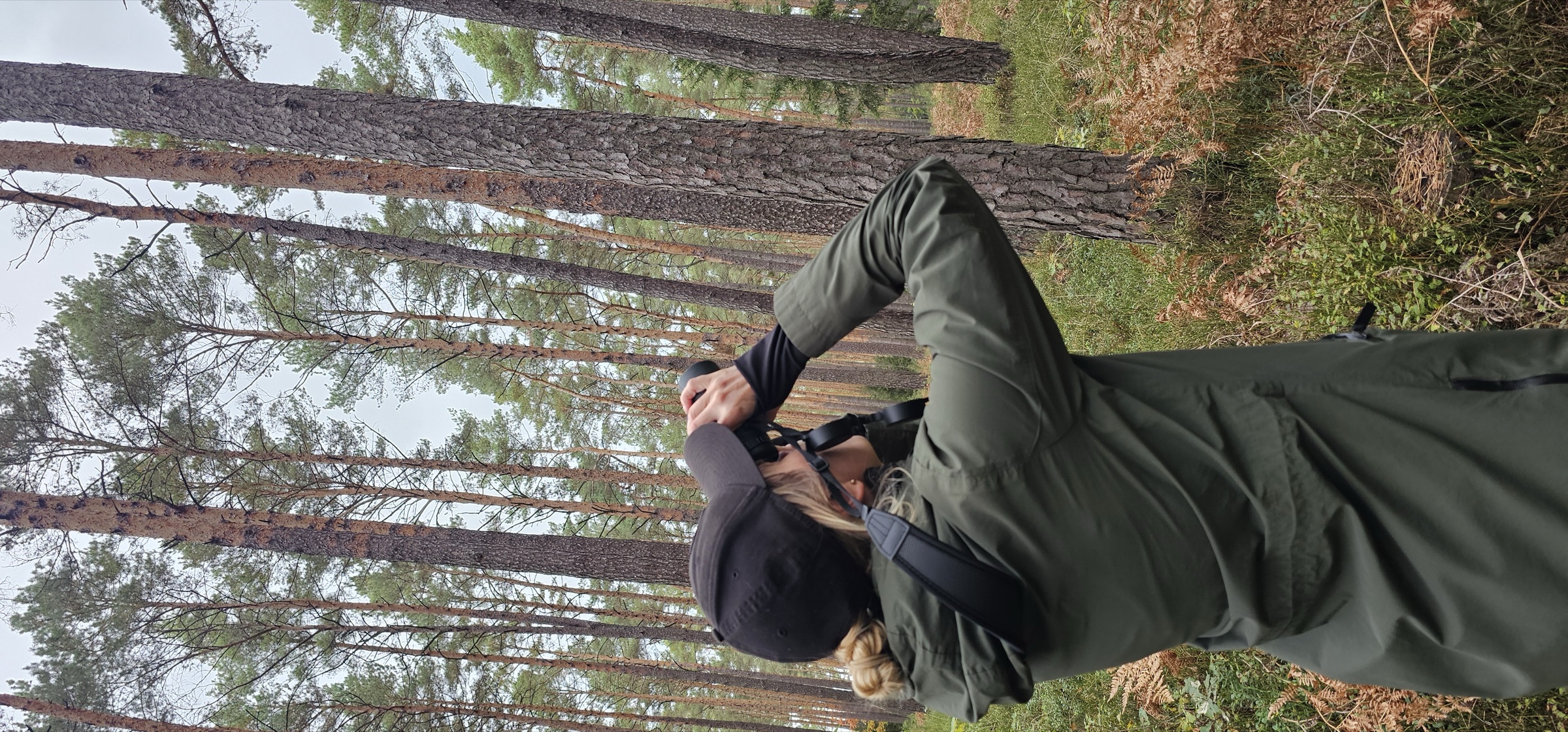
Having two examples of the same model is especially valuable to us. Watching nature becomes even more rewarding when you can share it with another person. A detail is easier to explain when someone beside you can see it for themselves. It is also easier to compare settings and help someone find a comfortable way to look.
Imagine a simple situation: one person spots movement among the branches, while another tries to locate the same place. Looking together allows us to point out a landmark calmly and move from the general view to a particular subject. This small moment of cooperation is an important part of nature education. The equipment provides an opportunity; conversation and attention turn it into an experience.
That is why an optics partnership has a very practical meaning for us. We want people joining our walks to discover equipment in a natural setting and ask questions prompted by real observations. Binoculars become meaningful when you look through them at something that has truly caught your interest. Discussions of magnification and image quality then become much more than theory.
PASSION APO 16–48×65 — a compact scope, a rewarding view
The GPO PASSION APO 16–48×65 spotting scope brings a different perspective to the set. Its magnification range of 16× to 48× lets you begin with a wider view, find your subject and then examine it more closely. The 65 mm objective fits the idea of equipment you will happily take on outings that involve moving between locations.
GPO describes the PASSION APO series as using an apochromatic optical system, ED glass and coatings designed to improve optical performance. The manufacturer's materials also specify a magnesium housing, nitrogen filling and IPX5 water protection. These are construction specifications, not claims that we have performed our own waterproofing or durability tests. GPO information about PASSION APO spotting scopes.
What we like most, however, is the role a scope like this can play on an outing. Once the tripod is set up, there is room for a quiet, sustained look at one small part of the world. You no longer need to hold the equipment continuously. You can frame the view, focus on a bird's behaviour and give others a chance to enjoy the same scene. It is a completely different rhythm from quickly scanning your surroundings with binoculars — just as useful and just as enjoyable.
Our first response to the view through the scope was every bit as enthusiastic as our response to the binoculars. There is something special about the moment a distant subject stops being a barely recognisable dot and you can begin to pay attention to its details. We are delighted to add equipment that so strongly encourages us to stop and look.
Choose magnification to suit the conditions
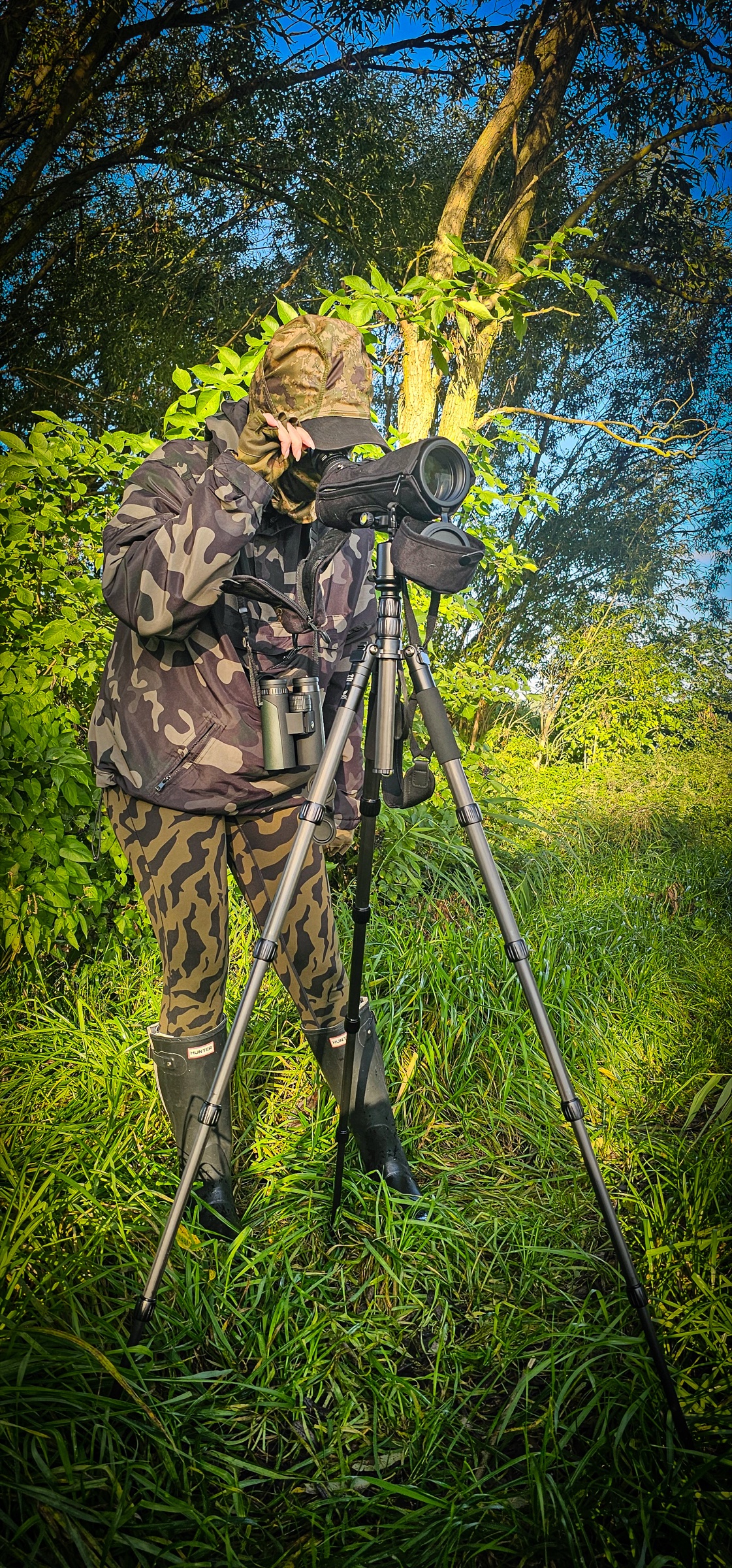
The ability to reach 48× is an advantage, but it does not mean maximum magnification is always the best setting. The air between us and a bird also affects the image. Warm surfaces, atmospheric shimmer, mist and wind can limit the detail we see. At higher magnification, tripod vibration becomes more noticeable and the image becomes dimmer.
A useful habit is to start at the lower end of the range. This makes it easier to find a subject and understand its surroundings. You can then increase the image scale gradually, stopping where the view remains most useful. Sometimes moderate magnification offers the most enjoyment and information. What matters is what you can actually see, rather than the position of the zoom ring.
It is also worth paying attention to the tripod itself: firm ground, sensibly spread legs and a height that allows comfortable viewing without unnecessary strain. When observing in a group, making the setup comfortable for the next person matters enormously. These small details help you make the most of the scope and bring a calmer rhythm to watching wildlife.
A compact set makes sense in the Barycz Valley
Our interest in nature takes us through a variety of landscapes. These include the open expanses of ponds, woodland paths and places where it is best simply to pause for a while. We therefore appreciate equipment that offers a choice of viewing styles without requiring an entire outing to revolve around a single instrument.
For us, 10×42 binoculars and a 65 mm scope are a sensible addition to the equipment we already have. A compact spotting scope has a different role from a larger model with an 85 mm objective: we are particularly interested in its portability and how easily it can be brought along as additional optical equipment. There is no need to choose one solution for every occasion. It makes sense to match your kit to the length of the route, the light and the kind of observation you have planned.
We also appreciate optical quality beyond spectacular wildlife encounters. A nature outing does not need to end with a rare species to be worthwhile. A good look at a common bird, patiently following its behaviour or discovering a detail you previously passed without noticing can be enormously satisfying. GPO equipment fits this kind of curiosity about the world very well.
More detail, with respect for wildlife
At Ptasia Dolina, feeling close to nature also means knowing when to give it space. Binoculars and spotting scopes help us watch wildlife from a distance. They do not remove the need for care, but they can reduce the temptation to approach simply to see more.
The animal's welfare remains the priority. If a bird begins to show signs of unease at our presence, we should increase our distance or end the observation. No amount of magnification justifies disturbance, leaving permitted paths or unnecessarily approaching resting places. Some of the most beautiful scenes are those in which an animal can simply get on with its life.
This is where good optics meet our approach to education. We want to show nature more clearly while encouraging patience and respect. Equipment that helps people see details without closing the distance provides valuable support for that approach.
Caring for your equipment is part of a good outing
Even well-built optics deserve care. Objective covers, a suitable case and careful handling help keep equipment in good condition. Before cleaning lenses, remove loose dust and use materials intended for optics, following the manufacturer's instructions. After a damp outing, allow exterior surfaces to dry before putting the equipment away.
Weather resistance is an advantage, but it is not a reason to expose equipment deliberately to unnecessary tests. We would rather spend that time watching nature. A good body, proper storage and simple habits all help prepare the equipment for many outings to come.
Come and look through GPO
Our introduction to this set began with genuine delight. The PASSION ED 10×42 and PASSION APO 16–48×65 made an excellent first impression on us, both in their images and their build quality. We are pleased that these instruments can accompany Ptasia Dolina and help us share our passion for nature.
The best complement to any description, however, is to look for yourself. Through our activities, we want to offer opportunities to explore optics outdoors, discuss their uses and discover which way of observing you enjoy most. You can ask whether this set will be available on a particular walk when planning your visit. Find our current activities in Ptasia Dolina's programme.
Thank you to GPO for your trust and support. To us, good optics are an invitation to keep discovering the world: to take one more look into the treetops, spend another moment beside a pond and ask another question about the lives of birds. Equipment that can inspire that curiosity earns a very important place in our kit.
Read about the beginning of our partnership: GPO joins Ptasia Dolina's partners. Nature content from the brand: GPO Nature. The technical specifications quoted in this article come from the linked GPO materials; the first impressions are those of the Ptasia Dolina team.